
Snapshot
-
- Mineral owner payment dispute resolution
- Multi-state title opinions and curative
- Texas Railroad Commission regulatory compliance
- Federal lands title matters and BLM lease file review
- Ownership deck audits and reconciliation
-
- Independent Operators
- Public and Private Energy Companies
- Mineral Owners
-
- Title opinion experience spanning eight states, including Texas, North Dakota, Wyoming, Colorado, Utah, Oklahoma, New Mexico and Montana, plus close to twenty opinions completed in Ohio’s Utica shale
- A North Dakota client relationship spanning roughly twelve years, carried forward from a previous firm
- Ownership deck audit work that functions as informal consulting, unwinding a decade of accumulated calculations for a major operator
- Personal mineral interests in Oklahoma and Wyoming, a hands-on stake in the same plays he advises clients on
-
- Texas
- North Dakota
- Wyoming
- Colorado
- Utah
- Oklahoma
- New Mexico
- Montana
- Ohio
Details
-
- St. Thomas University School of Law, JD, 2008
- Franklin and Marshall College, 2004
-
-
State Bar of Texas, Energy Law Section
Rocky Mountain Mineral Lawe Foundation
Dallas Association of Professional Landmen
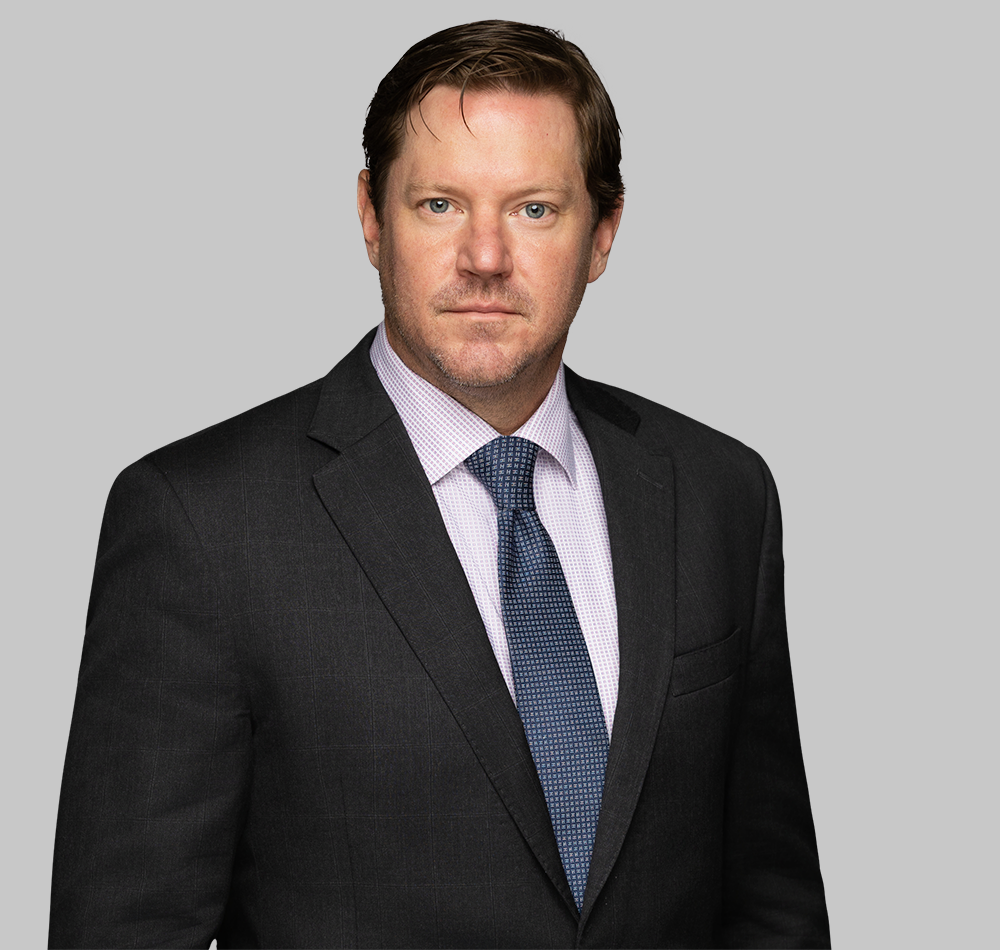
Gregory Sharry
Managing Attorney
Gregory Sharry writes title opinions and resolves mineral owner disputes for exploration and production clients across eight states, stretching from the Permian Basin in Texas to the Bakken in North Dakota, a footprint most Texas-based oil and gas attorneys never build. While many attorneys spend their entire career working within a single state’s rules, Greg has dealt directly with six or seven different state oil and gas regulatory bodies, giving him a firsthand view of how ownership, curative and complexity shift from one basin to the next.
Reading a payment dispute before it becomes a bigger problem
Most weeks bring a call about a mineral owner who believes something is wrong, either that they are not being paid or that they are being paid the wrong interest. Greg’s job is to go back into the underlying documents, confirm what governs the interest, and work out how it should be tracked. More often than not, nothing was miscalculated, so the real work is explaining clearly what happened and why. A large share of that work comes from a North Dakota client relationship that goes back roughly twelve years, to his time at a previous firm, with a client he describes as “very hands-on.” His Texas matters run differently, leaning heavily on regulatory compliance in front of the Texas Railroad Commission.
A footprint that runs from the Permian to the Utica
Beyond Texas and North Dakota, Greg’s opinion work has taken him into the Niobrara in Wyoming and Colorado, Montana’s Richland County, some New Mexico matters at Feighny Hartle, and close to twenty title opinions completed in Ohio’s Utica shale. He has picked up personal mineral interests of his own in Oklahoma and Wyoming along the way, an extension of what he calls exploring oil and gas both personally and professionally.
Federal lands work and an eye for what gets left behind
Federal lands title work is a routine part of his opinions in North Dakota and comes up even more often when a file touches Wyoming or New Mexico, where federal ownership is nearly always in play. Working through Bureau of Land Management lease files is a regular part of that practice. Along the way, Greg has noticed that many decades-old federal leases still carry override interests sitting untouched in suspense, held by families who often have no idea the interest even exists. He has long viewed that gap in old federal lease files as an underexplored corner of the industry.
Untangling a decade of ownership records
In recent years, a growing share of Greg’s North Dakota work has shifted toward auditing ownership decks the client originally assembled roughly ten years earlier, tracing the math behind old calculations without always having the full picture in front of him at the outset. It is work that feels less like traditional legal practice and more like consulting, going in to clear out a company’s records and tell them who actually owns what.
"Title work is a puzzle, and I have always loved puzzles. I have worked the Sunday crossword for twenty years, and a chain of title scratches the same itch. Give me one where nothing adds up on the first pass, and I will find where it went wrong."